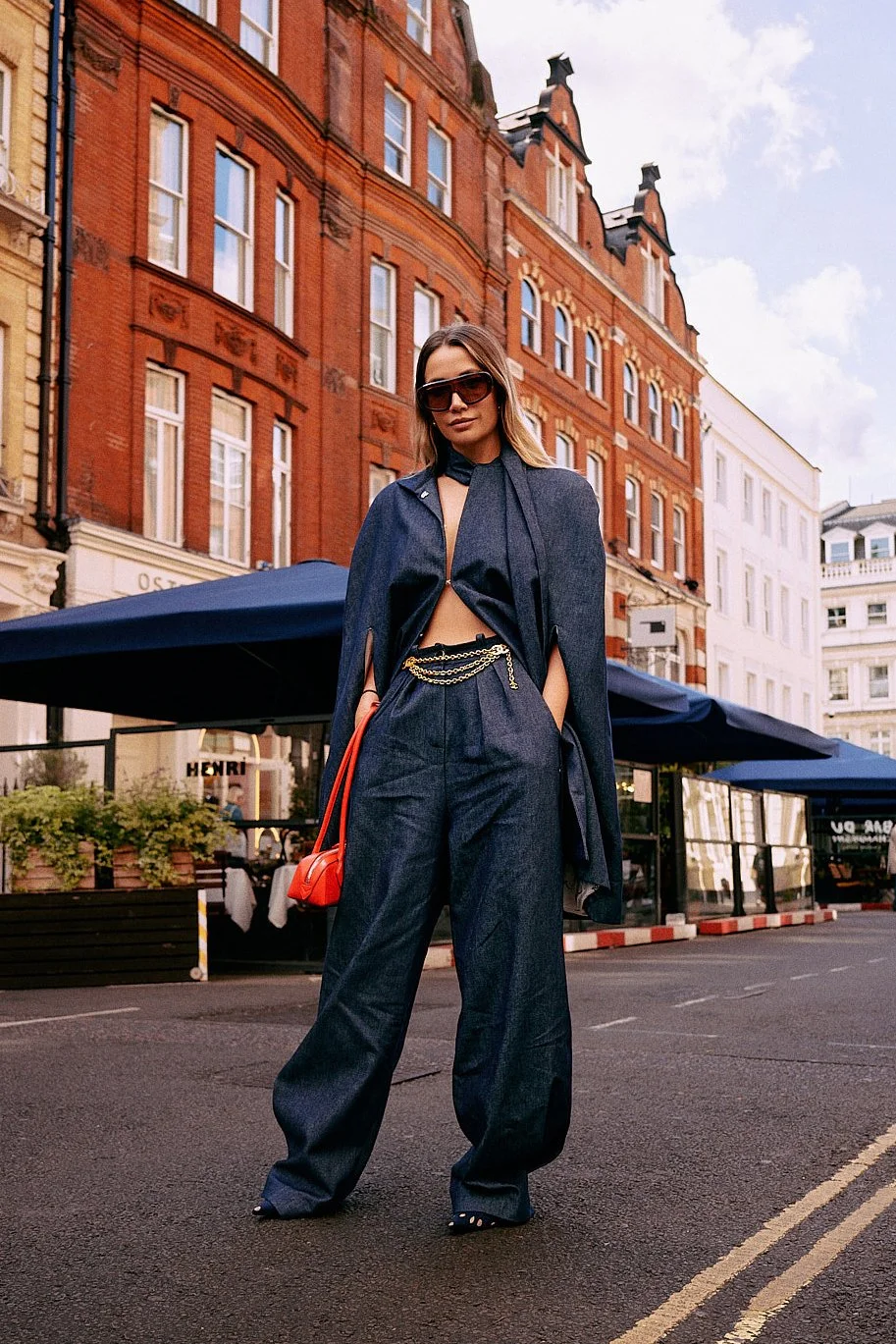
While it was once something I avoided at all costs, approaching strangers for street portraits has become one of my favourite street photography pursuits in London.
Namely, photographing street style at Fashion Week is how I broke the seal on approaching people; it made confidence in approaching a necessity.
In all my street photography work in London, I capture it all with a 28mm pancake lens. I love the look it creates when getting up close. It forces you to make careful considerations with your backgrounds – and also gets you outside of your social comfort zone.
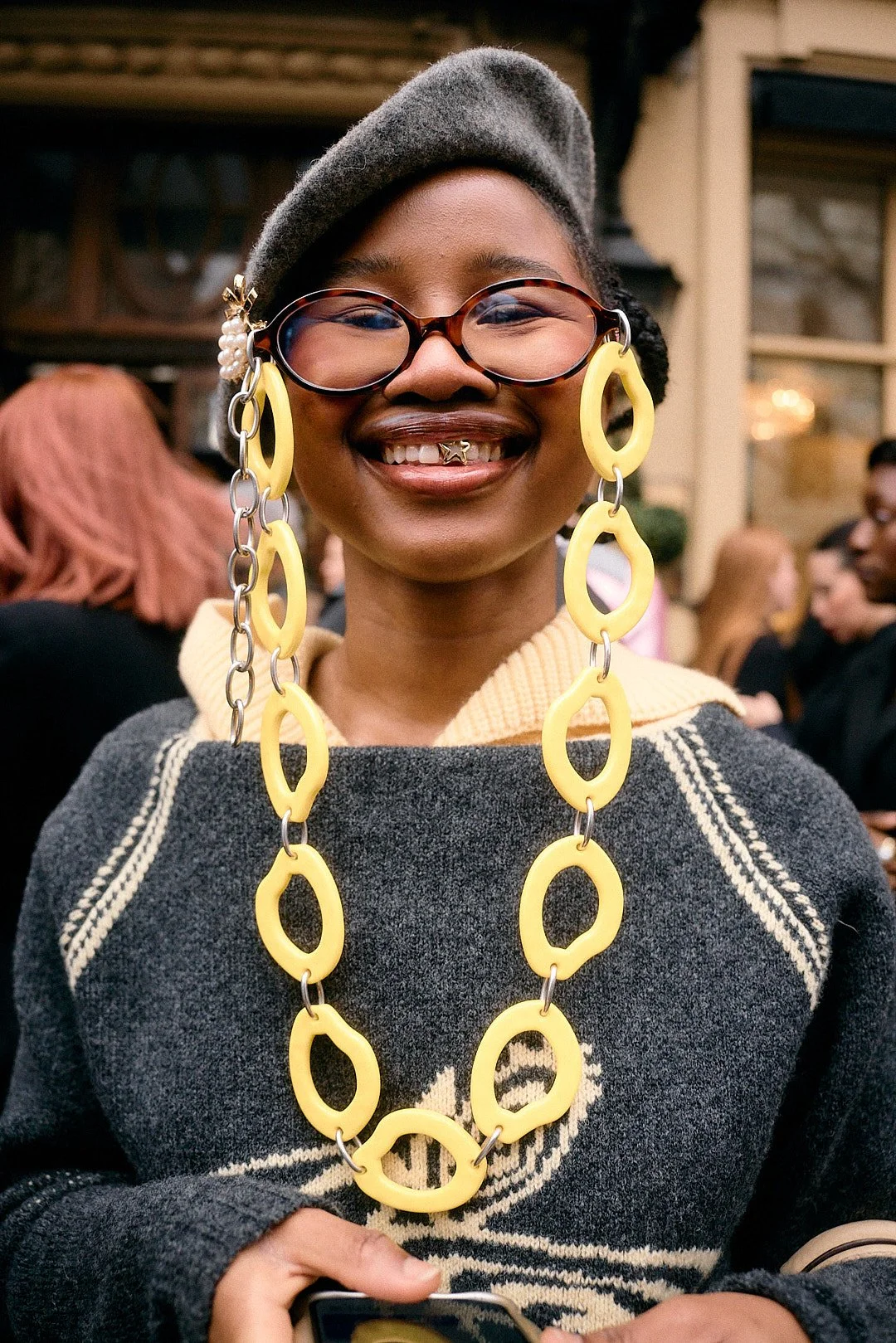
Street fashion portrait of stylist Blessing Afolayan at London Fashion Week AW25.
When passing strangers on the street, it’s easier to get in close for a snap while continuing to move. However, in an environment like Fashion Week, when you see the subject you want to photograph, the 28mm lens forces you to get in close for a usable shot. Taking a drive-by hipfire shot doesn’t often cut it.
I first wrote a guide on overcoming the awkwardness of street photography, sharing tips and tricks for candid street photography. After travelling for one year, shooting exclusively street photography around the world, I came to love some handy tips for shooting candidly (and effectively) from the hip without disturbing others – even with a heavier lens.
However, what was once daunting – shooting candid images of strangers – became my default and comfort zone in my new home of London, having just recently moved from Vancouver, Canada.
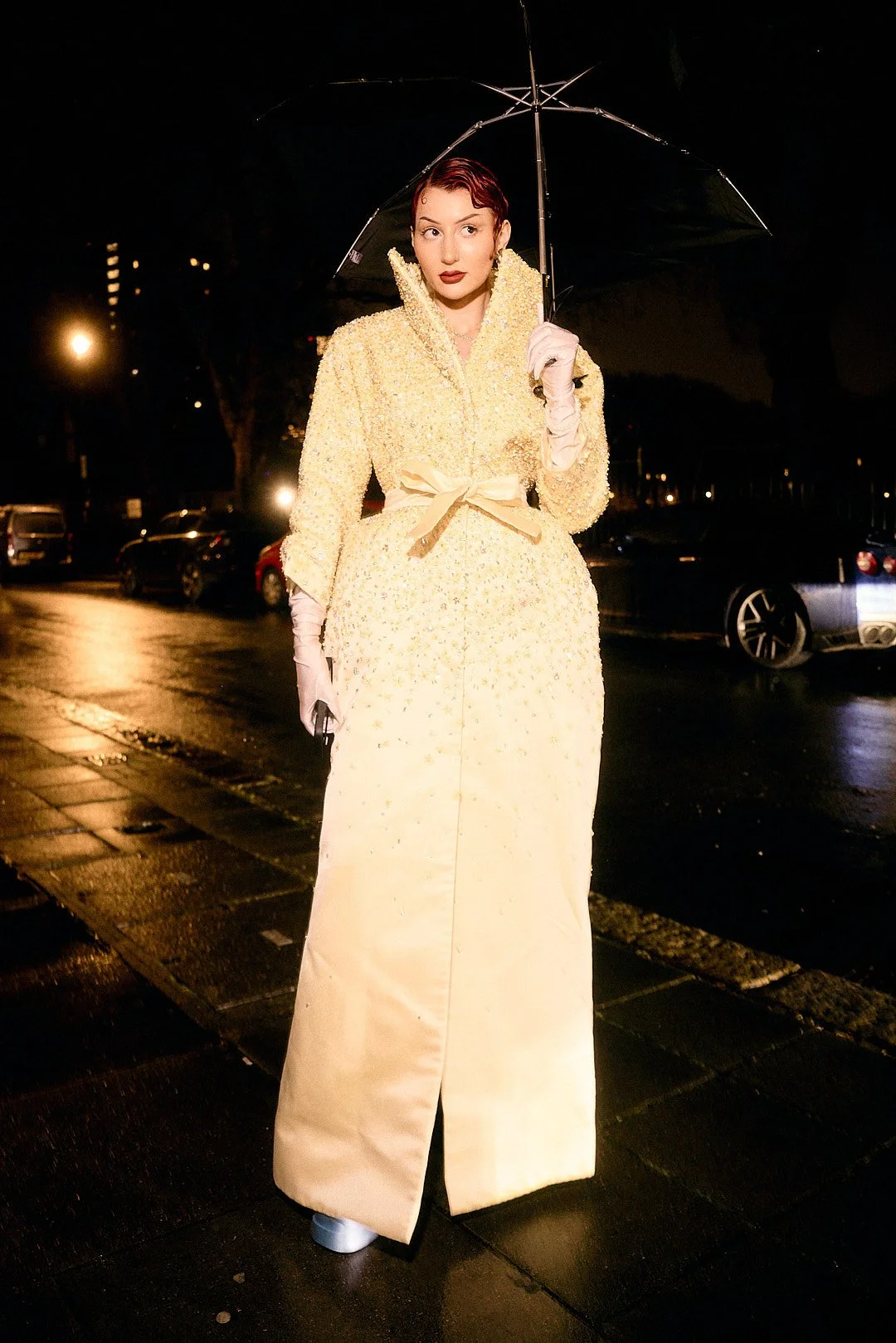
Street style portrait of Eve-Lily at London Fashion Week AW25.
While I moved for the opportunity to travel in Europe, explore advertising photography opportunities with UK brands, and make editorial fashion images with the talented creative community in London, what first interested me long before was, indirectly, London Fashion Week.
After graduating from university, I backpacked through Europe and ended up in London for a weekend, which just so happened to be London Fashion Week. I didn’t know what street photography was at the time, but the buzz and energy I felt around London – and taking photos of the street style I saw – made it one of the few places I’ve travelled where I felt there was much more to discover.
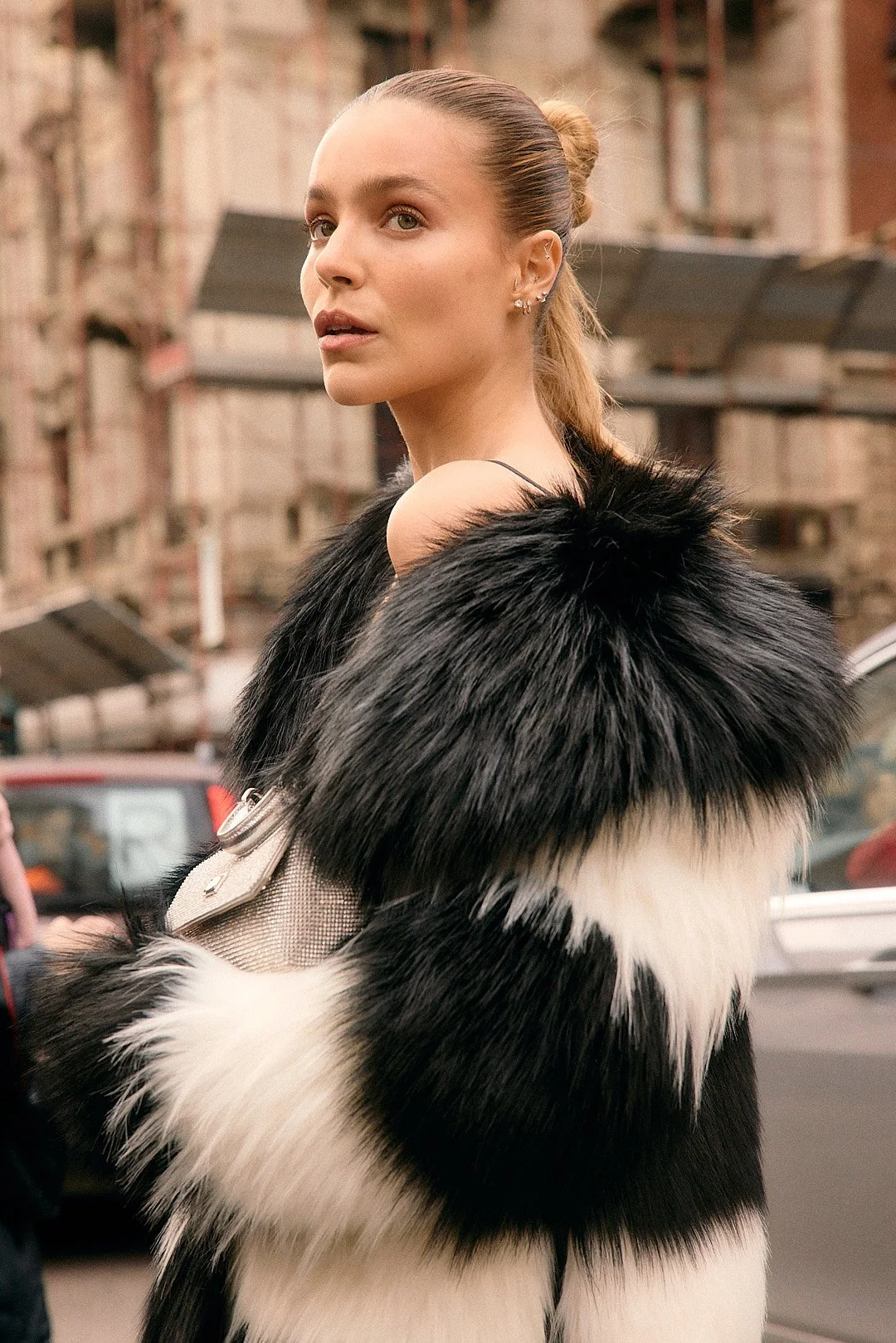
Street style portrait at Milan Fashion Week AW25.
Having established myself now in London, primarily as a commercial and advertising photographer, street photography remained my favourite way to express myself and connect to the community. Even though my day-to-day photography work revolves around directing one-on-one photoshoots like personal branding, headshots, and even dating photography, I’ve always felt that street photography works a different part of my brain.
Rather than a director, I’m an observer. Fortunately, working a different part of my brain means I’m spared from the burnout (for now). I can proudly say I’m able to relax from photography – with more photography.
In this separation of observer and director, I published my Street Photography London: One Year Walking the City collection, highlighting the observational street photography work I created while exploring my new city in my favourite, relaxing way.
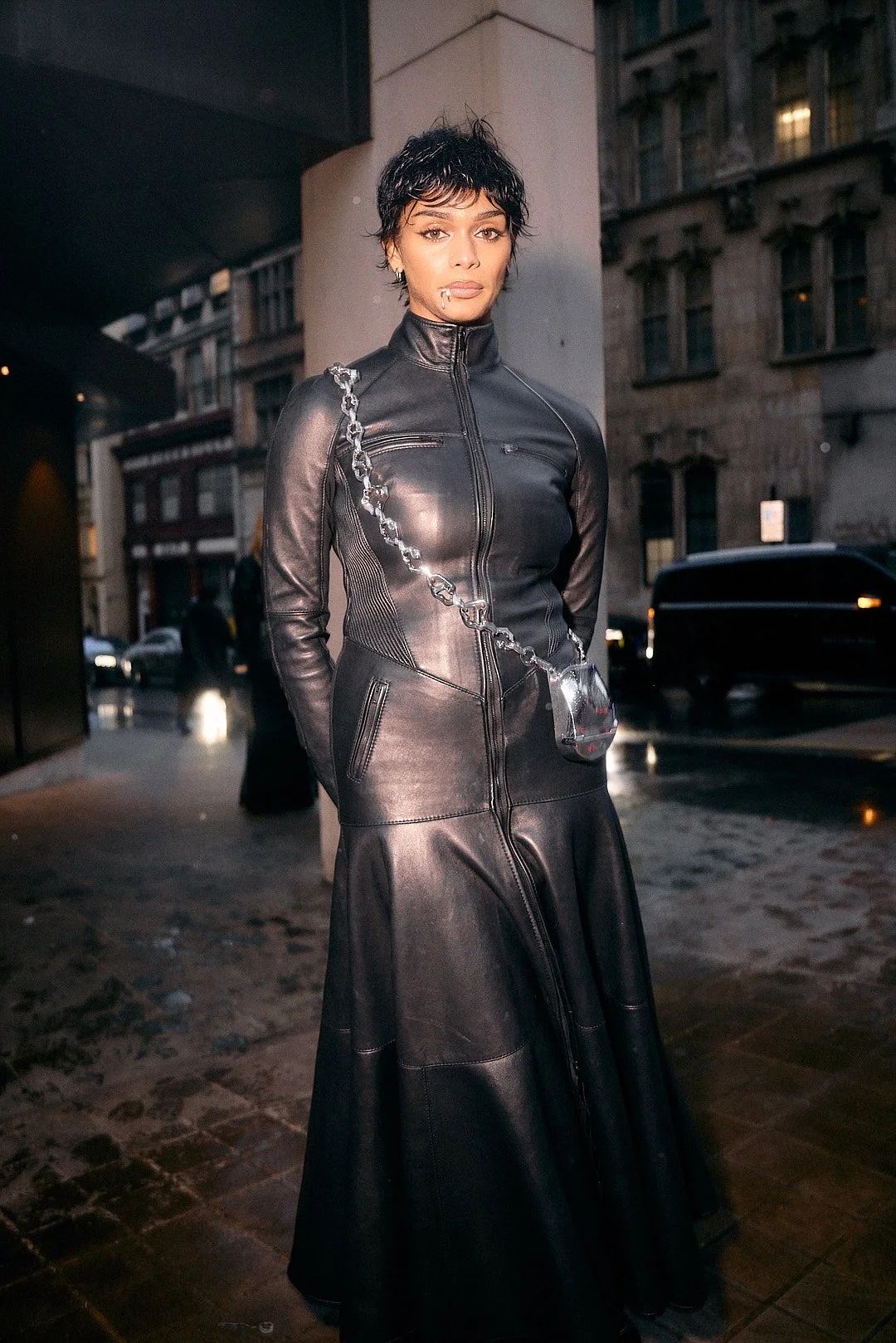
Now, coming to street fashion photography at Fashion Week, it’s where all my photography loves come together: the spontaneity of street photography, the candid posing of lifestyle photography, the looks and textures of fashion photography, and the banter with other photographers and guests.
Having moved to London and begun my photography business as self-employed, integrating into the photography community requires intention. The people I’ve met in and through Fashion Week have paved my career and friendship circle, partly due to the social nature of fashion that makes it an attractive place for like-minded, chatty individuals.
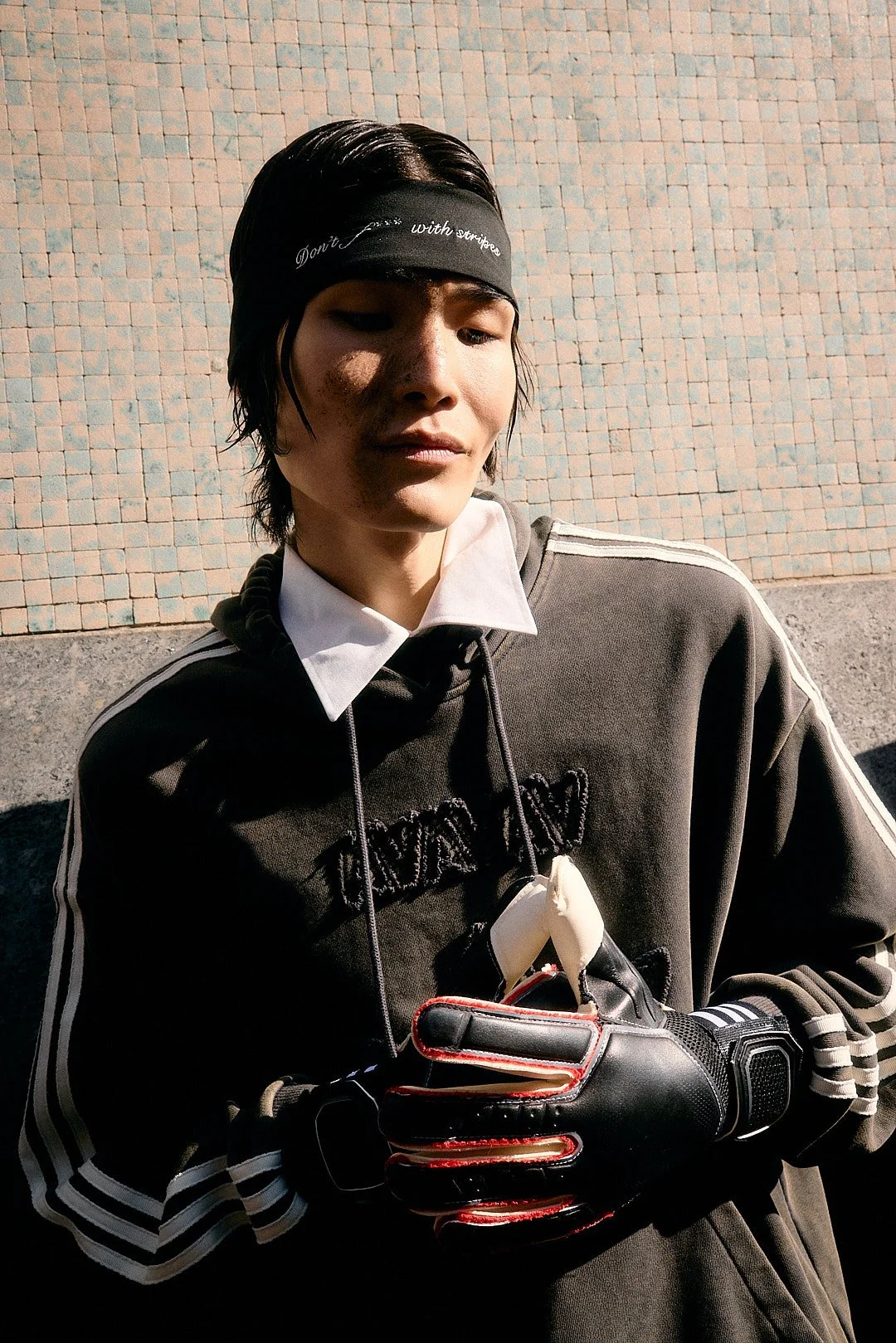
Street fashion portrait at Milan Fashion Week AW25.
Having only the 28mm pancake lens, I challenged myself to use and shoot differently with it. I realised I need to step outside of my comfort zone and make the approach to create the portrait my mind envisioned.
Doing so has led me to paid photography commissions in London for Burberry, Pinterest, and the BBC – all from my first Fashion Week as a Londoner and approaching people I thought were cool on the street.
Breaking the seal on approaching and the momentum that comes with it has not only been the best networking I could’ve done for myself in London, but it’s also given me a portfolio of street fashion photography images that excites me to expand it in London, Paris, Milan, and beyond.
It’s shaped my photography goal and career, all because I was forced outside my comfort zone one day because of the limited equipment I had with me. It needs to be approached with a glass-half-full, optimistic mindset. People more often than not say yes. It’s a learned skill I wish I pushed myself into sooner, and I’m here to share what made this not-so-scary for me after all.
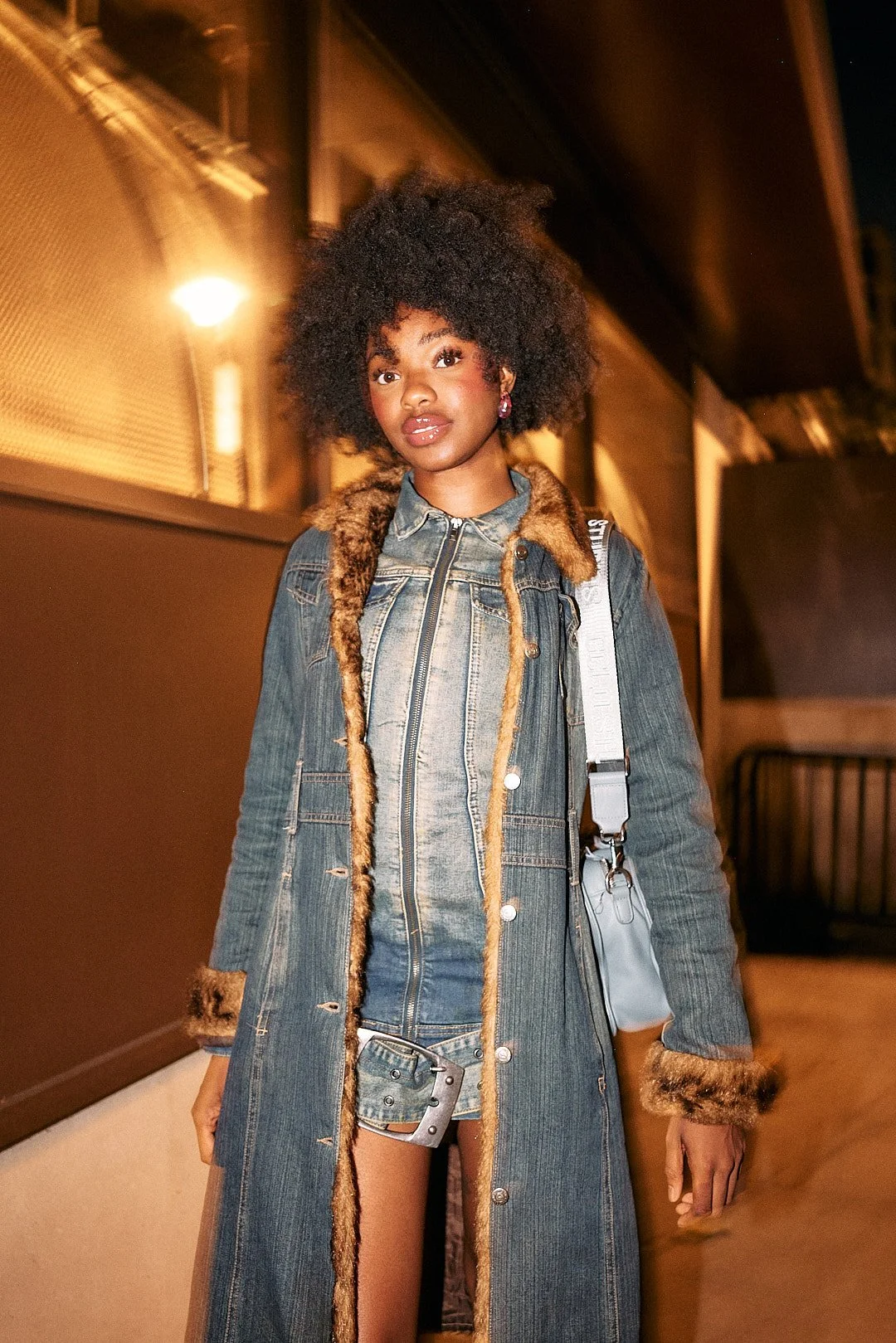
Street style portrait at London Fashion Week AW25.
Approaching strangers for street portraits
Posing strangers when you have a short amount of time
The technical choices that make a street portrait feel intentional
Using natural light to your advantage
Know the story you’re telling
1. Approaching strangers for street portraits
“Hey, I love your outfit. May I make a portrait of you?”
That’s it. That single sentence has taken me further than any clever script ever could. It’s clear, respectful, and flattering without being overbearing. Most importantly, it gives the person an easy yes or no.
I chose each of those words intentionally.
First, substitute outfit for anything that truly is a genuine compliment. The easiest way to approach is sincerity; it’s a lot easier when you’re telling the truth.
Second, “Make a portrait”, versus “take a photo”, is much more endearing. You are making something together, versus taking something from them. It’s a mutual act that they’re agreeing to, and it comes across as sharing your craft.
Third, a portrait, versus a picture, puts meaning behind what you’re creating. People take photos with their phones every day, but posing for a portrait contrasts with what they’re used to – and what’s commonly asked of them.
Last, “may I”, versus “can I”, is the classic English teacher’s correction – like when I was corrected into saying “may I” when asking for the bathroom in elementary school.
I think of approaching strangers like walking past security somewhere you belong. You don’t sneak. You don’t hesitate. You act like you’ve done this a hundred times already – even if you haven’t.
It’s always easier when you’re with someone else. Confidence is contagious, and even standing next to another photographer can lower the psychological barrier.
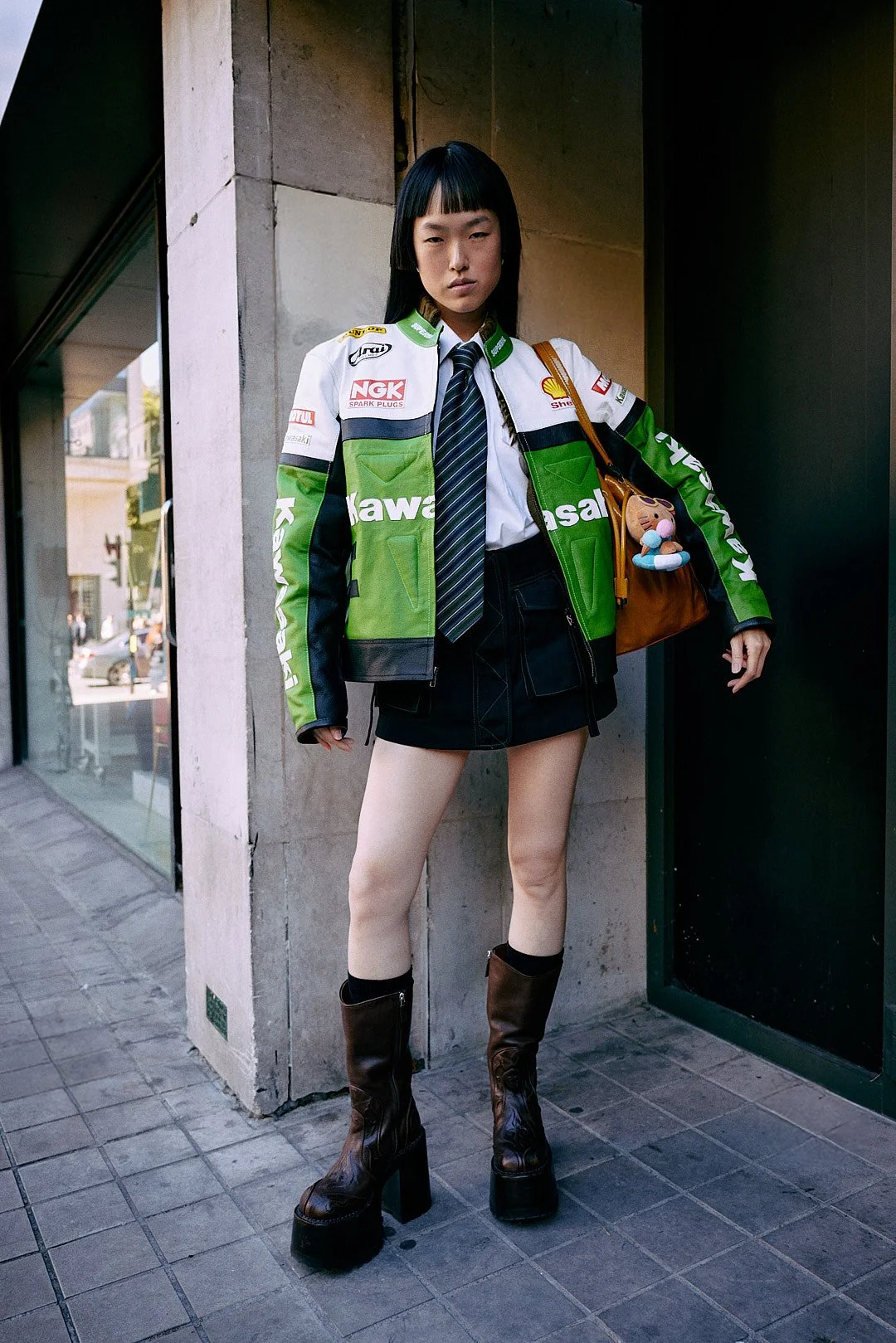
Street style portrait of model Hody Yim at London Fashion Week SS25. One of the first street portraits I’ve shot. Hody was one of the only to push back, asking what it’s for and where it’s going. After showing her my Instagram, she agreed and we created this image, later working on set together at an editorial fashion shoot weeks later.
Body Language
Before you ever open your mouth or make the approach for a portrait, you’re already communicating.
First impressions matter, so care about how you present yourself. People notice you when you’re standing off to the side on the street, looking at your phone or for your next potential subject. You’re always on if you intend to approach anyone.
You don’t need to look flashy or “fashion” – you just need to look intentional. Someone who looks put together feels safer to say yes to.
For example, within the first hour I ever started approaching strangers for street portraits at Fashion Week, there’s one guy I won’t forget. He was older, wearing a tightly buttoned dress gilet and tophat with a neatly shaved goatee. I’m all for finding your style, but any reasonable person would agree that those items will make you stand out and attract attention – whether positive or negative.
As a well-dressed person walked past, he approached them, held up his camera, waved it at them, and blurted out “Picture?” with his head half tilted to the side.
As you could imagine, she said “No, thanks” and sped up her walk past him.
I used my phrase on the same girl a bit further down the sidewalk (as we stood outside the fashion show entrance), and she was appreciative and agreed.
From that point, I continued to use the same phrase that worked with her: “Hey, I love your outfit, may I make a portrait of you?” – making a point to emphasise the word love.
This other photographer sat down on a bench, unknowingly sitting next to my wife. He complained to his friend about what he thought about my approach, saying to them, “ya, that’s not my style” (as my wife relayed to me later). Within a few seconds, as I came to greet my wife, the photographer said to me in a mildly patronising tone, “Great job on the confidence”. Only because of my wife did I know it was an empty compliment.
What I found the most interesting is that I said the same phrase to myself always when making excuses about not approaching people in a vulnerable way. “That’s not my style”. I then realised what I thought was not my style was really me holding myself back from stepping out of my comfort zone.
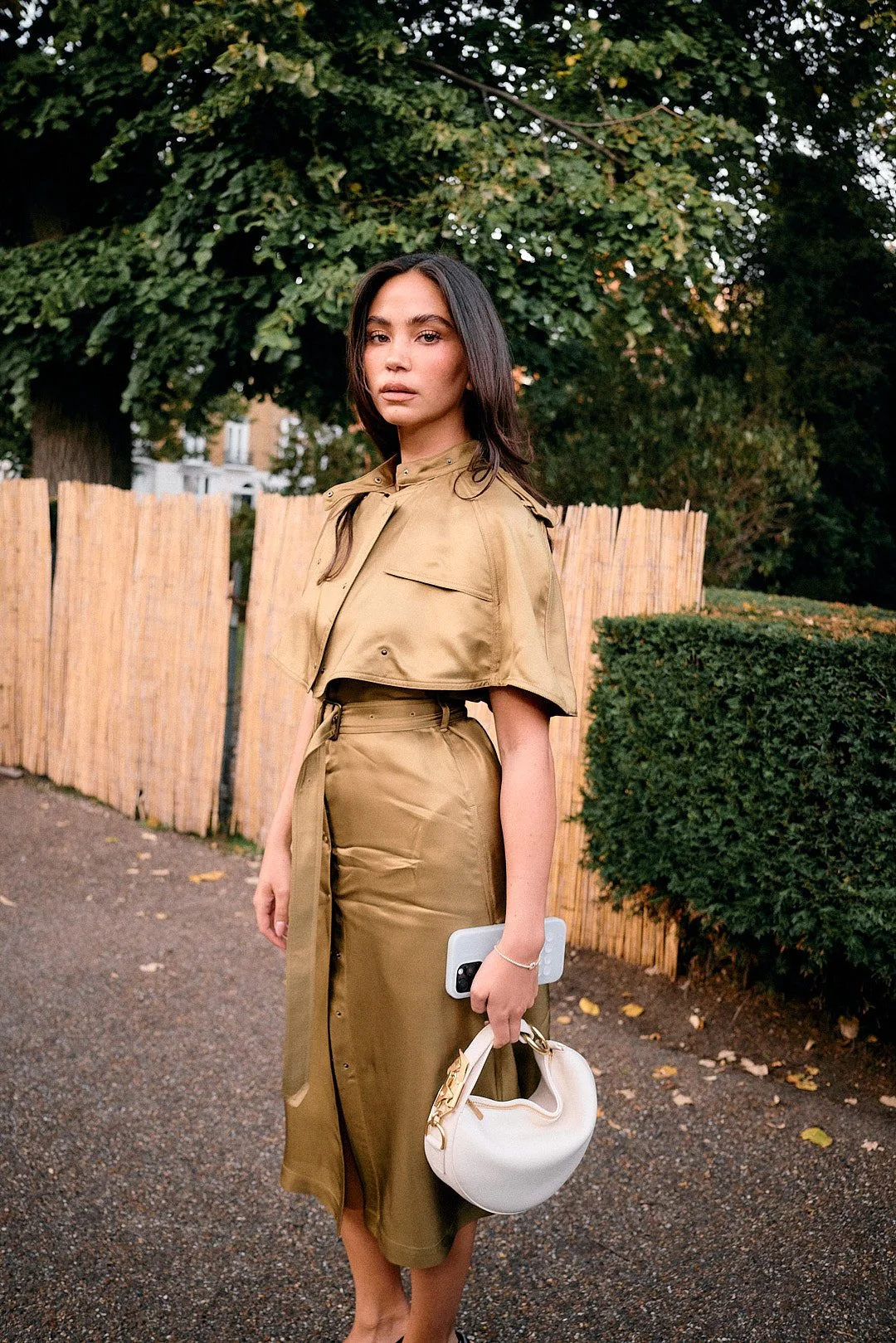
Street style portrait of Christina Nadin at Burberry’s London Fashion Week SS26 show.
Make eye contact when you speak. It sounds obvious, but it’s incredible how many people avoid it when they’re nervous. I emphasise when you speak, because eye contact is easy when you’re listening; it’s hardest when you’re speaking, as described in Leil Lowndes’ book How to Talk to Anyone – a book I highly recommend.
Be aware of what you’re doing when you’re not shooting. Your posture, where your arms sit, where your eyes wander – do you look approachable, or like someone waiting to ambush a photo?
When, or about to engage with, a subject, remember easy, simple, yet often forgotten, phrases like:
“Excuse me…”
“Do you have a quick moment?”
“Are you comfortable if I move you around a bit?” – especially when posing someone
Respect goes a long way, and it’s important to make a warm impression within the first few moments, as that drastically changes the images you create.
And be mindful of personal space. Not just theirs, but everyone else’s too – especially in busy areas or around other photographers.
Quantity Breeds Quality
Your first 20 approaches might feel awkward. Your next 50 will feel easier. By 100, you’ll wonder why you were ever nervous. Confidence is built through repetition, not theory.
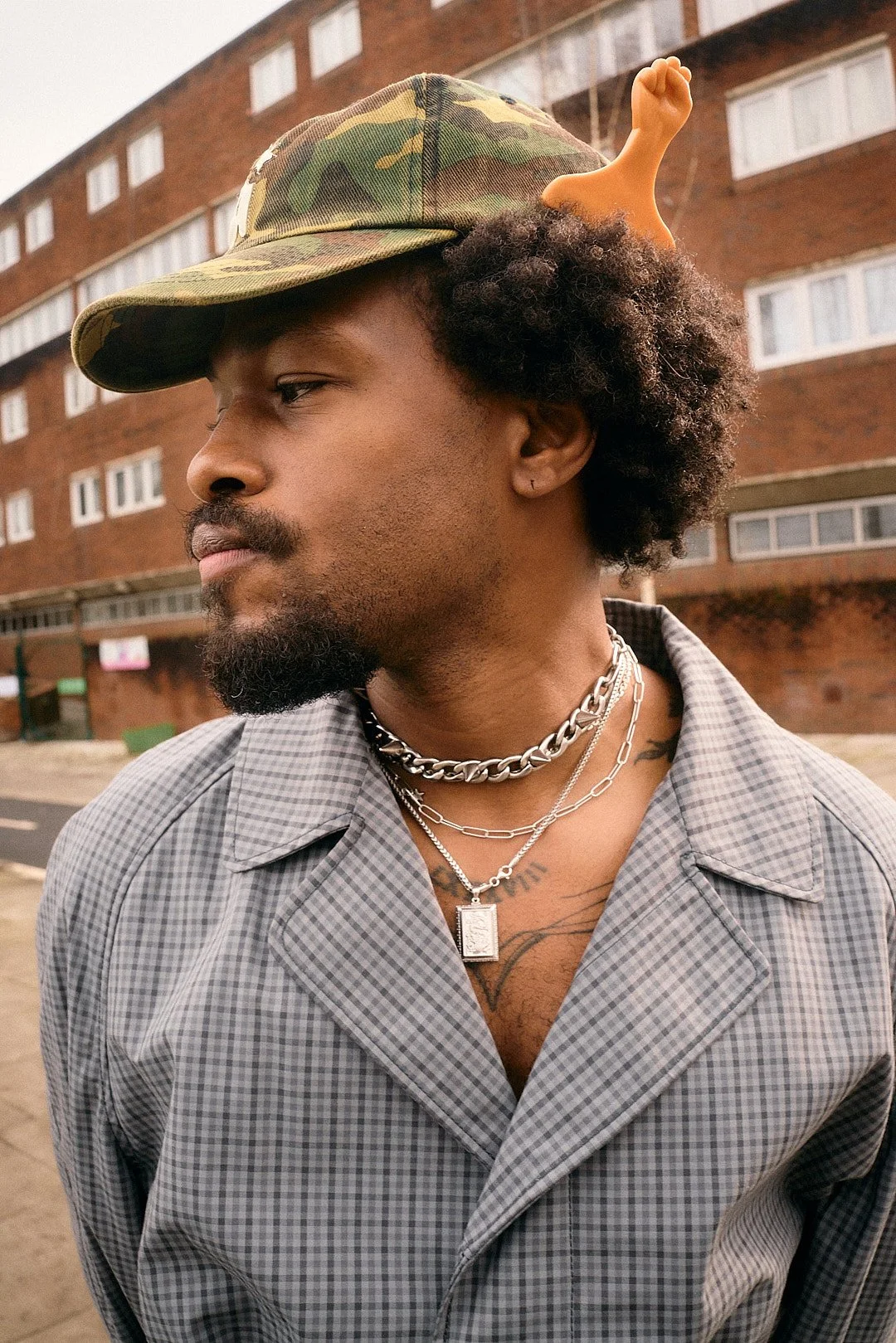
Street style portrait of Duckwrth at London Fashion Week AW25.
2. Posing strangers when you have a short amount of time
When someone says yes, you’re on borrowed time. Your job is to create something you’re confident with, quickly.
Within lifestyle photography, I often photograph subjects who aren’t models. Specifically, as a dating photographer, I often encounter confident personalities who become immediately awkward in front of a camera.
The way I overcome that is through warm calls and communications leading up to the photo session, and chatting over coffee for half an hour, without a camera present, before moving into anything photography-related.
Photographer Annie Leibovitz describes in her book At Work that she seeks to dedicate a day spent with a subject, ideally the day before their portrait session, without a camera around. The subsequent portrait session sometimes only takes 20 minutes or less; the rapport, trust, and comfort are already built.
When you’re shooting street portraits, you don’t have the luxury of time – or any deep sense of trust, only your first impression and a few sentences.
When I shoot headshot photography, I often only have a few minutes with someone to get a photo they’re confident with. In writing a guide on how to pose people who aren’t models, I have quick tricks to get a natural expression and even an organic smile where it fits.
If you need a quick, natural expression and pose from a non-model:
Have them look away or down, then back to the camera.
Ask them to tightly scrunch their eyes and open them on your cue.
This is best for a natural smile, as it often makes them laugh.
Keep a bend in their arms, creating triangles – avoid keeping them pressed against their sides.
A triangle bend is flattering for all body types, and it draws attention back into the subject. It can be done with hands in pockets, arms bent while walking, holding an object, leaning against a railing, or raising them.
Arms pressed against sides, in most cases, make their silhouette appear larger and less shapely.
If ever at a loss, ask them to adjust their clothing.
This creates a natural opportunity for movement without holding a stiff pose. People naturally loosen up when they’re doing an action, rather than posing.
For my dating photoshoots, these are my 70+ poses and prompts for dating app profile photos that lean on scenes rather than poses. Using visual storytelling, we’re creating opportunities where it would make sense that a friend would’ve taken that photo, and not the product of a posed photoshoot. The same applies to street style and portraits: moments are more impactful than poses.
Prompts may include buttoning a cuff, adjusting their watch, pulling their jacket on, lacing their shoes, putting on their purse or scarf, or reaching for something in their pockets.
Once the “pose” is done, don’t stop shooting. Such as when they’re putting their phone away or reorganising, walking off, or turning back to say bye.
The moments immediately after you finish directing are often my favourites – the guard drops, and you have opportunities for real moments. Capturing a moment is the competitive advantage photography has over all other art media.
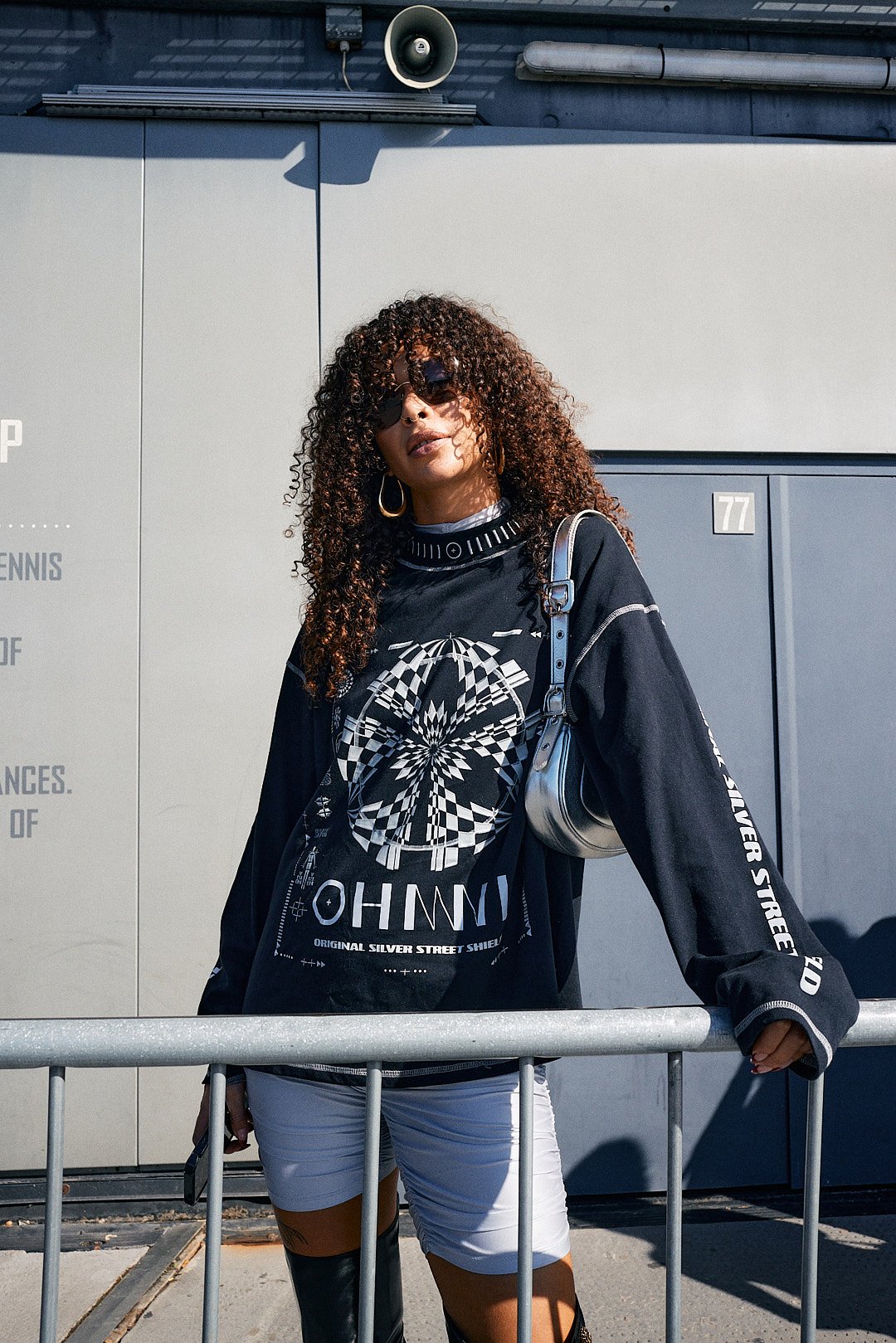
Street style portrait outside Emirates Stadium at London Fashion Week SS25.
3. The technical choices that make a street portrait feel intentional
While camera settings and creative decisions always change depending on the circumstances, once someone agrees to be photographed, the technical decisions you make – often in just a few seconds – are what separate a quick snap from a portrait that actually holds attention. These choices don’t need to be complicated, but they do need to be deliberate.
Composition
The easiest composition is also the most common: subject-centred, looking into the camera, clean background. And while that works, it’s rarely the most interesting option.
On the street, composition incorporates your environment. Look for movement instead of stillness. Shift yourself rather than asking your subject to do all the work. Understand, and be intentional with your angles.
Are you shooting from below, eye level, or above? What do you naturally gravitate towards?
Though I love a symmetrical centre frame, when I look at all my work, I often take a lower angle. Maybe it’s because I’m less than average in height, but I often find shooting from below eye-level lets the environment frame the subject from a different, often overlooked, perspective.
Take a second to slow down. Try off-centre framing, shoot from slightly above or below, or use doorways, windows, railings, or shadows to frame your subject.
Leading lines, foreground elements, or getting physically closer with a 28mm lens can instantly make a portrait feel more dynamic. If everyone else is standing back and shooting at eye level, do the opposite. The goal isn’t complexity – it’s making a choice that feels considered rather than default.
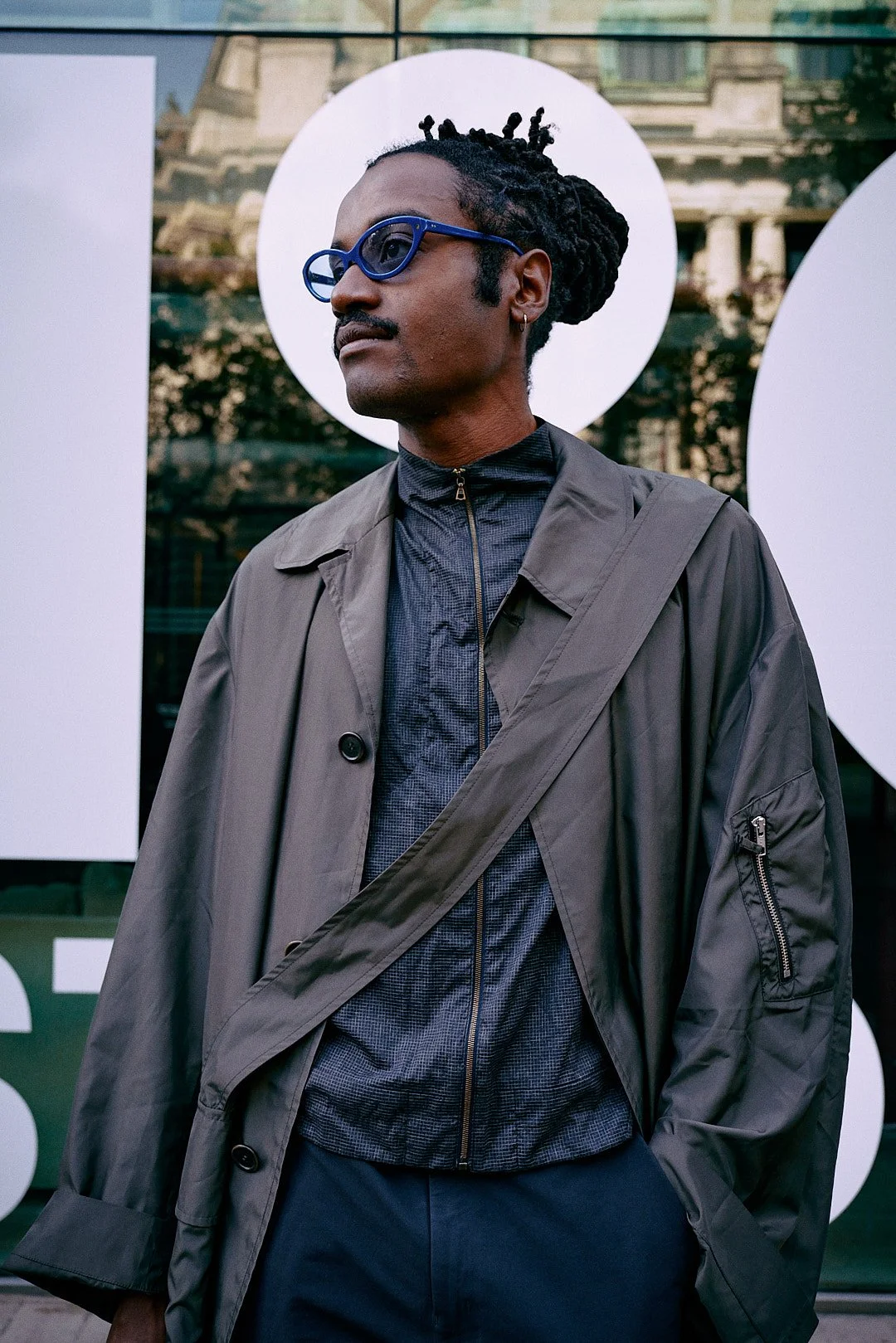
Street style portrait at London Fashion Week SS25, shot from a low angle to use what may otherwise be a distracting background element (the white window lettering) as an intentional frame around the subject’s head.
Depth of Field
A shallow depth of field is the quickest way to make a street portrait look “professional,” which is exactly why it’s also the most predictable.
Background blur hides distractions you didn’t have time or confidence to control. A bokeh blur is objectively great, but it’s comparable to hot sauce on food. Though I love hot sauce, it masks what you’re putting it on.
Once you’re comfortable, try stopping down and letting more of the environment come into focus. A deeper depth of field gives context, storytelling and compositional framing elements, and anchors the subject in a real place. The images become more editorial, where most images are photographed at double-digit f-stops.
The street gives you layers: foreground, subject, background. Use them. Let architecture, people, or signage quietly support the portrait rather than disappear completely. Just because your lens can do bokeh blur doesn't mean you should. Most natural light shooters are scared of high ISO, and you should’t be.
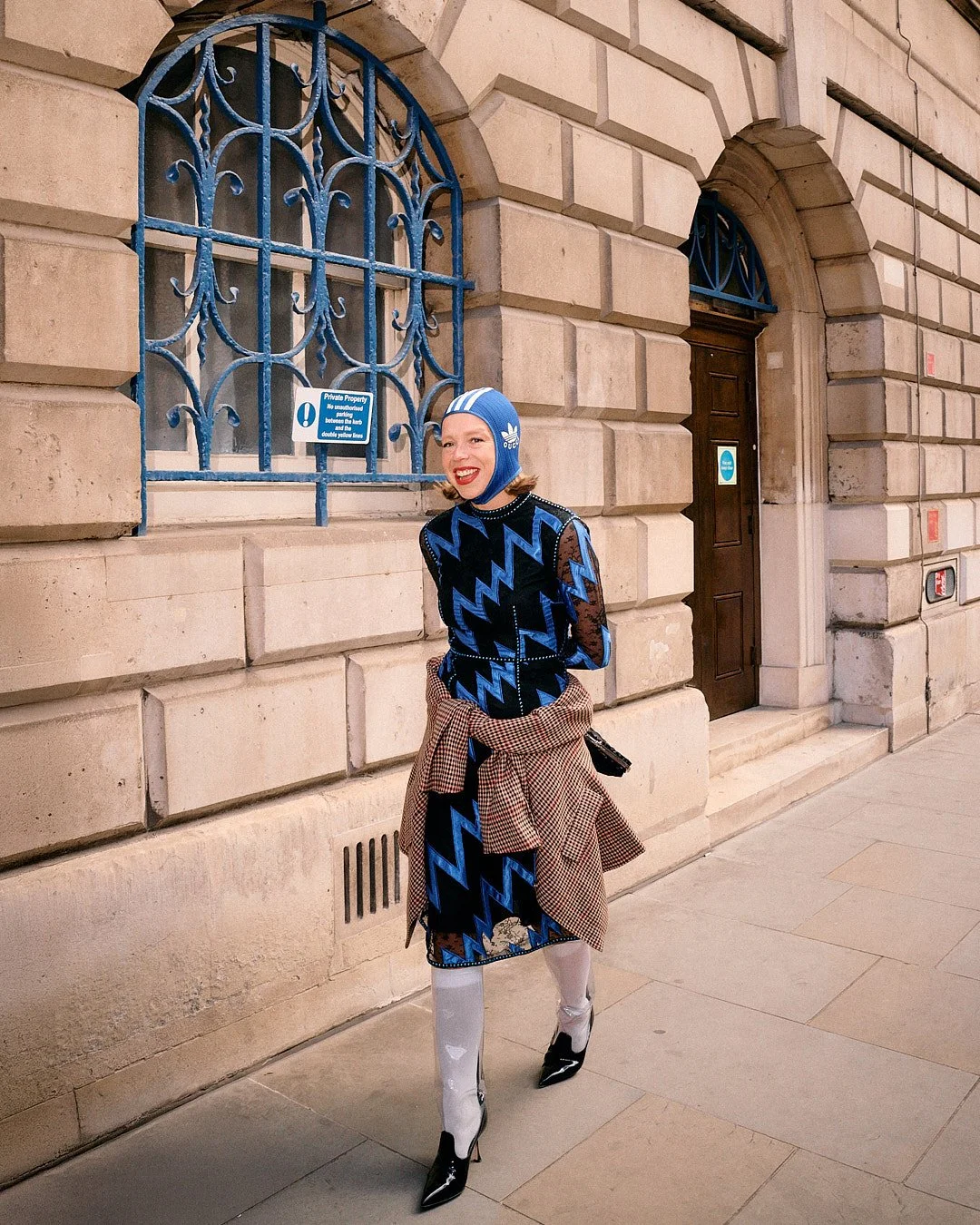
Street style portrait at London Fashion Week SS26 with deeper depth of field: the historical building and its framing elements – both the blue railings and geometry of the masonry – are all in clear focus to complement the subject.
Camera settings I default to
Shoot at f/8 and leave it there. You'll get way more in focus, too – especially if you’re using a camera or lens with slow or unreliable autofocus.
For example, my Canon R5 has amazing autofocus with eye tracking, but my RF 28mm lens struggles to keep up with fast focus changes. With a deeper depth of field, it offers a much more forgiving margin for error, so that your subject will be in focus while your lens catches up on focusing movements.
Most analogue street photographers, or those with manual focus lenses, use zone-focusing. It keeps the minimum focus distance at a constant, so that you know that anyone x number of metres away will always be in focus. The higher the aperture number, the more that will be in focus.
By using a deeper depth of field like f/8, you sacrifice flexibility for your other two variables: shutter speed and ISO.
When I choose a shutter speed for my street photography, I account for my fast walking speed – and the fact that my subject is walking at me with speed, too. I shoot 1/1000s whenever I can, rarely below 1/800s unless I’m losing daylight as it turns into nighttime.
When it comes to posed portraits, I bring that down considerably, with a minimum of 1/200s in most situations, but as low as 1/125s when I need to – or even lower, with the right in-camera and in-lens stabilisers to capture motion blur around a still subject.
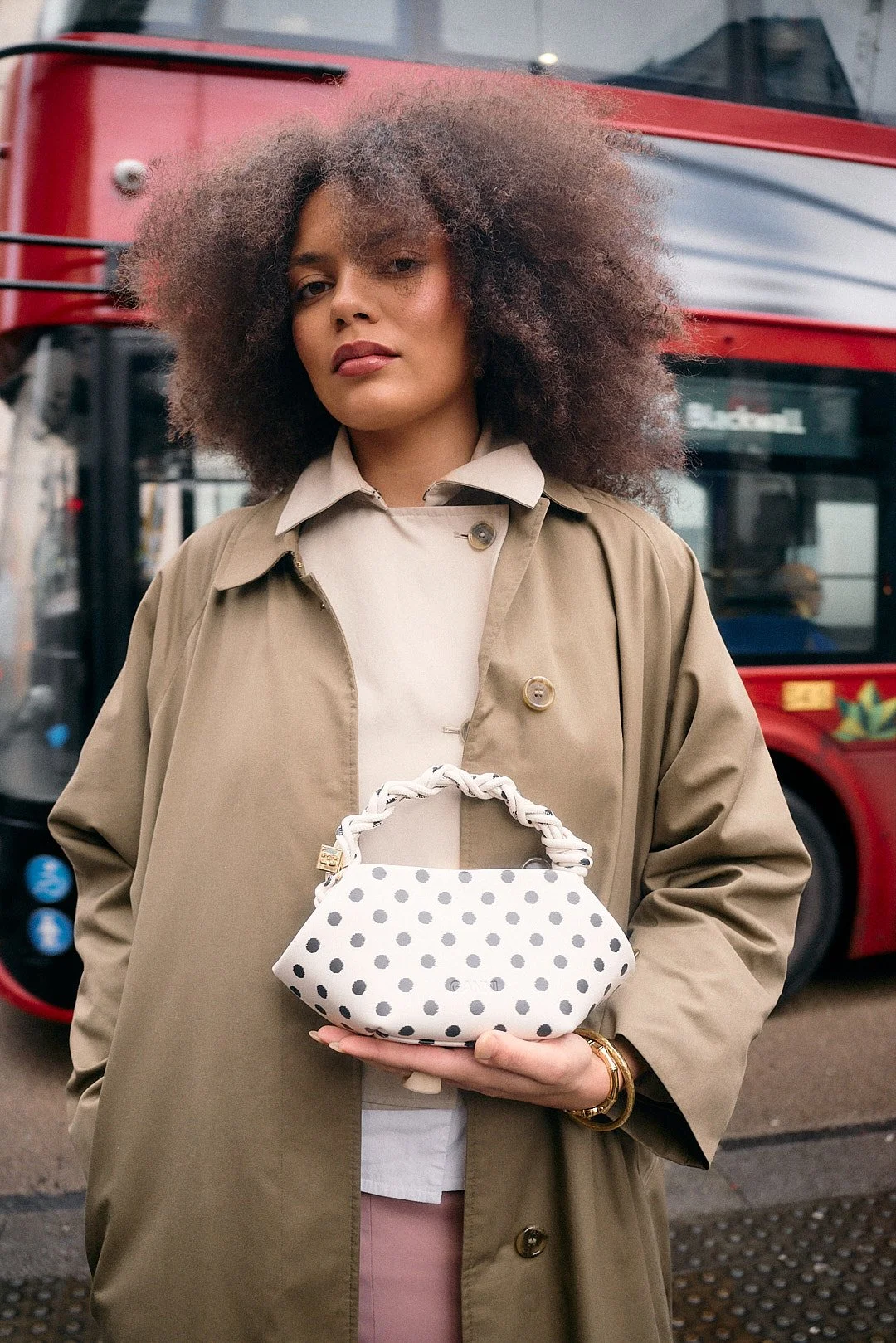
Street style portrait at London Fashion Week AW25, where the slight motion blur of the red bus behind her obfuscated it for a pleasing background – but I wish I left my shutter open longer for further blur.
I set my aperture and shutter speed, and I let my camera decide my ISO, keeping that set to auto.
Don't be scared of high ISO: 1600 to 3200; on full frame or Fuji, especially, it’s perfectly fine. I shoot that high for some on-location fashion photography editorials when working with moody and dim ambient light.
Noise reduction tools are incredibly powerful tools that stretch the ability of your camera, allowing you to incorporate deeper depths of field and fast shutter speeds when factors are outside of your control.
White balance
Auto white balance is an effective tool when shooting in changing lighting conditions, like at night with different coloured and competing ambient light sources. However, when shooting in consistent light, like sunlight or overcast, by using auto white balance, you relinquish creative control.
By setting your own white balance, you determine the mood, colour, and feeling of your images. Like choosing types of film, do you want the photos leaning slightly cooler or slightly warmer? Auto white balance makes that choice for you; you can ask yourself if that’s a decision you don’t want a say in.
Setting your own white balance makes editing batches much, much faster, too.
With AWB, the colour temperature changes for every photo. This means it’s something you’d uniquely (and often manually) adjust for every photo when post-processing. Whereas with a manually set white balance, copying and pasting the edits you made from one image to the rest requires far fewer white balance adjustments, or often none at all.
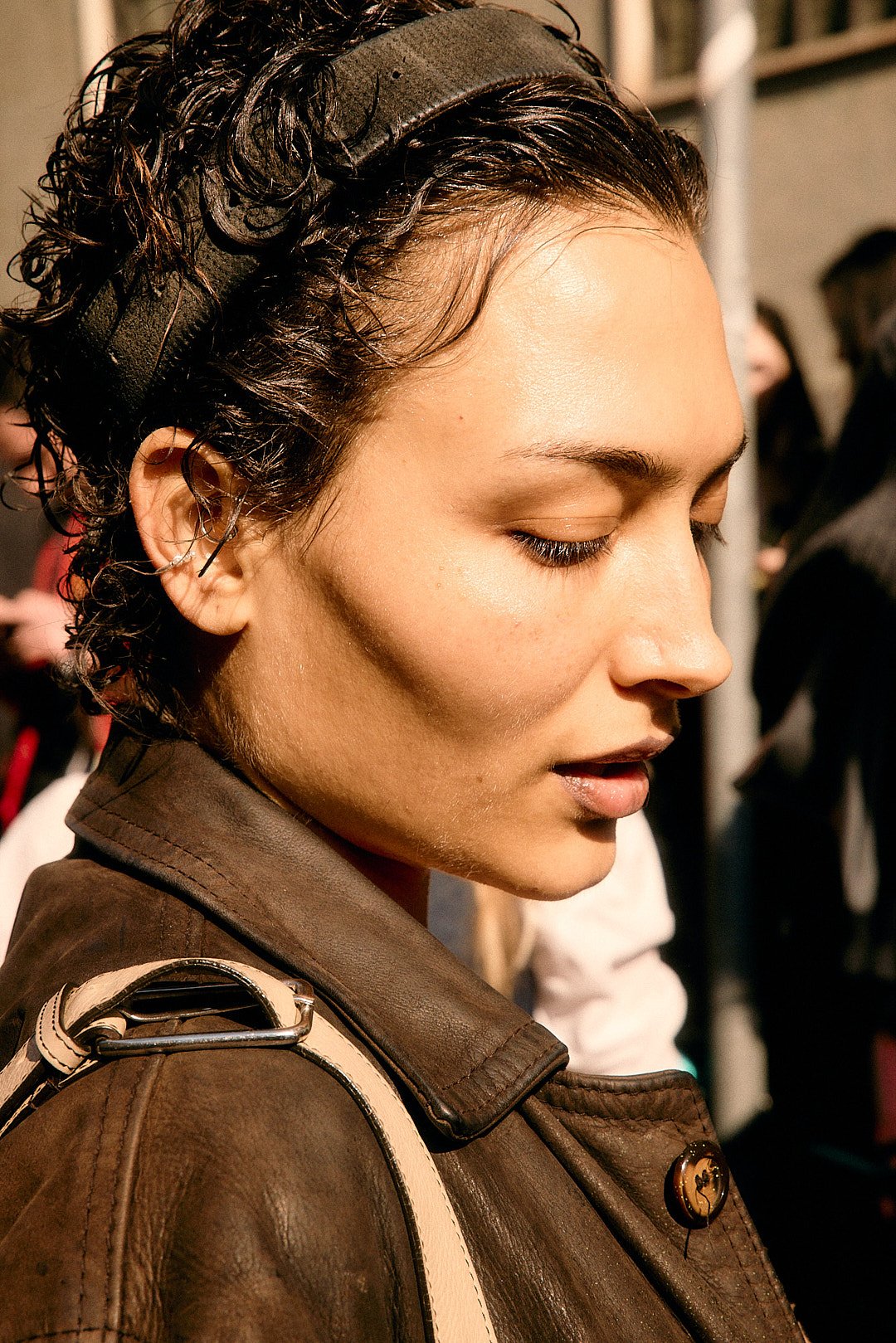
Street style portrait at Milan Fashion Week AW25. Shot at 28mm and in direct sunlight, using the “Shade” white balance preset setting on my Canon R5 for a warmer look in-camera. The aperture was set to f/11 for a sharper, more defined editorial look.
Lighting
Expensive cameras can only mitigate variables outside of your control, namely, poor lighting. Great lighting conditions let any camera, especially vintage ones, create stunning images.
Overcast conditions are forgiving and flattering, but they’re also ideal for on-camera flash. Street portraits are one of the few scenarios where flash feels natural and respectful, because you’ve already asked permission. Used subtly, it adds separation and clarity without overpowering the scene.
Earlier in my career, I wrote how (and why) to use an off-camera flash in photography. When applied to quick and mobile street portraits, I simply hold a Westcott FJ80 speedlight, with a cold-shoe handle and magnetic dome diffuser attachments, in my left hand when I shoot. This creates flattering Rembrandt lighting and shadows that are only possible with an off-camera flash. Most importantly, you can make your subjects pop in-camera.
The key is not avoiding certain lighting conditions, but knowing how to make each one work in your favour.
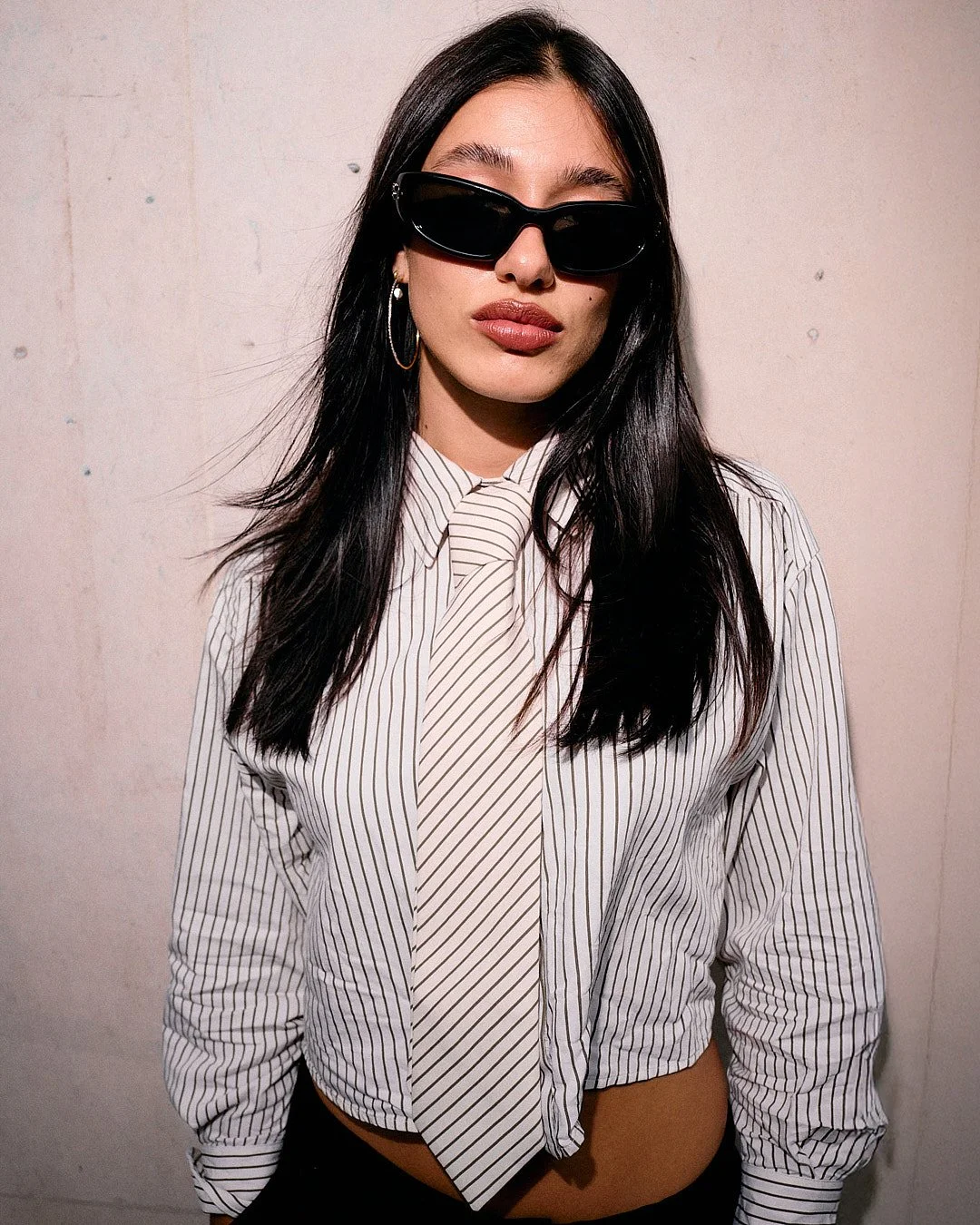
Street style portrait of Delilah Saxena using on-camera flash at London Fashion Week SS26.
The follow-up
What enables your approach to grow into a relationship is the follow-up offering – and the follow-through of it.
On my iPhone, I open a blank note in Notes and create a table with two columns: name and “Instagram/Email”.
I pre-populate the table with a few entries of my friends, so that the first subject doesn’t see they’re the first one or feel they were overly sought out.
At Fashion Week, I plainly ask, “May I have your Instagram so that I can credit you?”, and I hand them my phone with the cursor ready to type their name and contact. This avoids a back-and-forth of them verbally communicating how to (incorrectly) spell an Instagram handle.
Outside of Fashion Week, I ask, “How can I share these with you?”
Sharing the images is what has grown long-term working relationships with people I’ve met. For example, I photographed Tania Shroff outside of the Burberry Fashion Show, the first season I shot.
After sharing with her the image below, her makeup artist, Howard K.C.X., reached out, who was a contestant on Season 5 of BBC’s professional makeup artist competition, Glow Up. He loved the photo and wanted a copy. Since then, he’s become one of my go-to makeup artists, having now collaborated on numerous editorials together.
Meanwhile, Tania loved the image I took, too. We stayed connected, and she asked me to photograph her campaign with Burberry the following season. One of my favourite personal examples of where approaching a stranger for a portrait can open many doors.
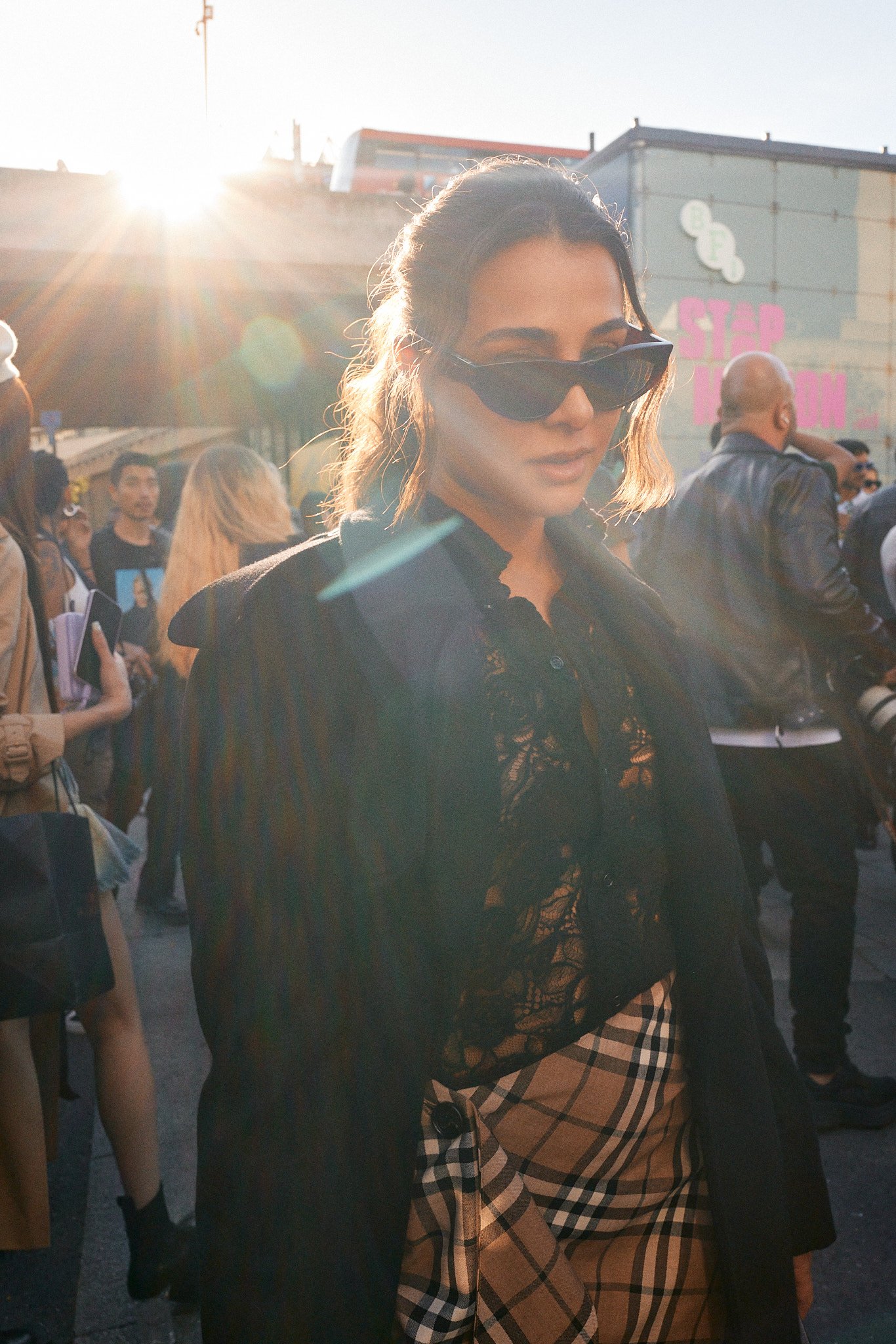
Street style portrait of Tania Shroff outside the Burberry Fashion Show at London Fashion Week SS25.
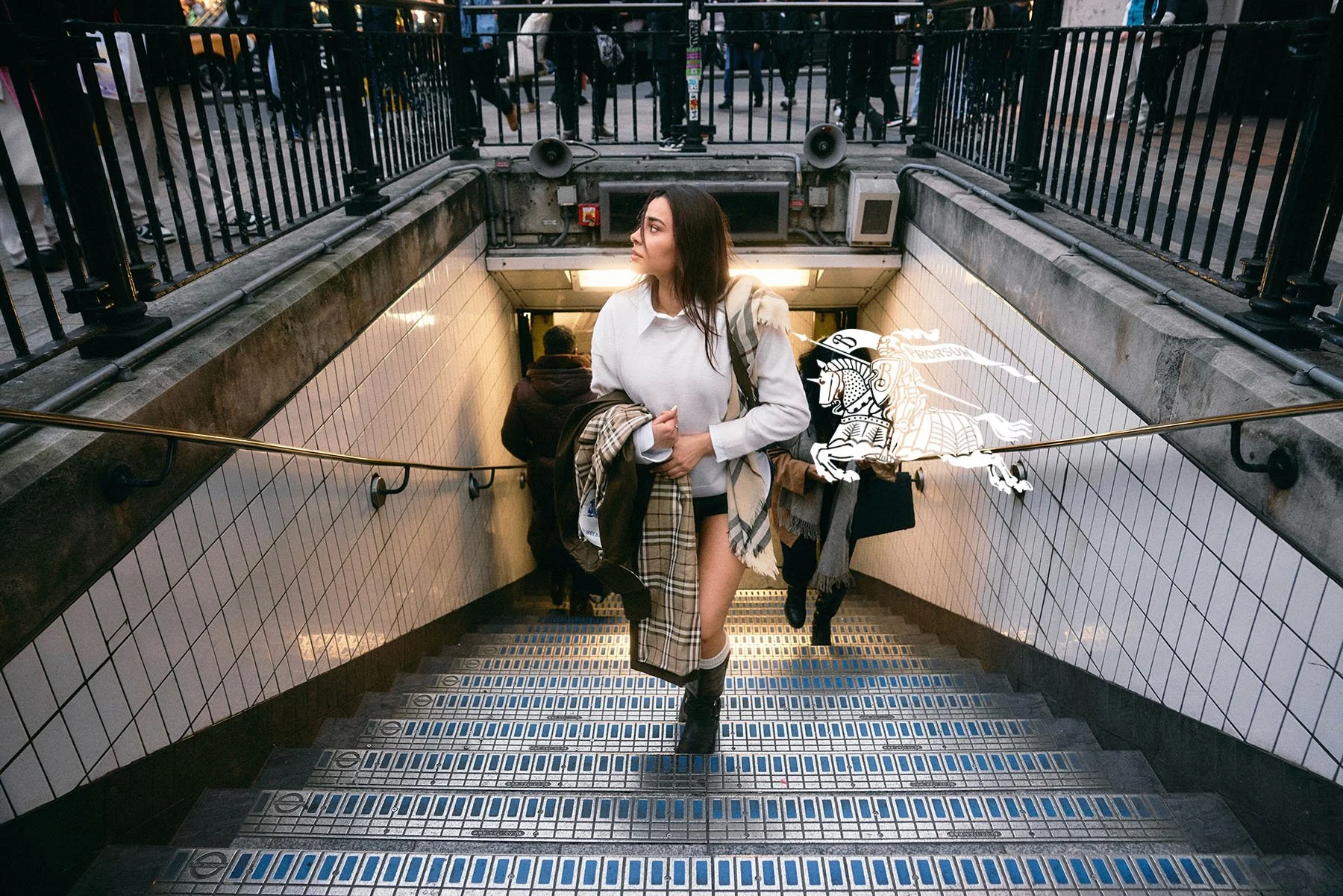
Subsequent work, commissioned for Burberry with Tania Shroff, the following season, all because I approached a stranger for a street portrait.
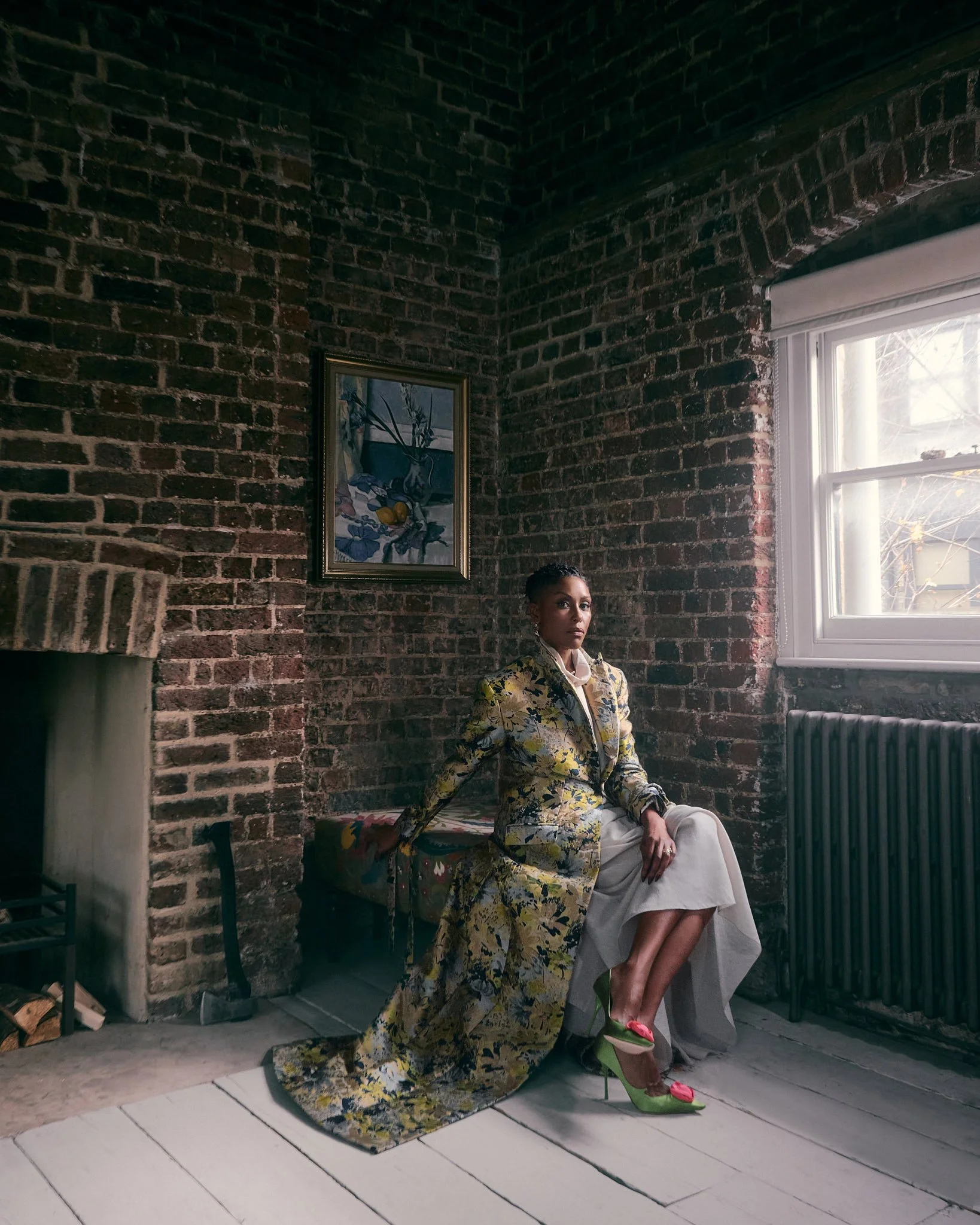
Recent work with Howard K.C.X. as my makeup artist for photographing actress Christine Adam’s cover of LE MILE magazine – stemming from a working relationship that began with approaching a stranger for a street portrait.
4. Using natural light to your advantage
When I first started street photography and focusing on people, after over a year of trial and error, I noticed a pattern: the photos I kept coming back to were shot in direct sunlight.
It’s not that overcast, softly-lit natural light scenes aren’t my favourite – it’s more that sunlight, and ultimately shadows, will often make what’s otherwise a boring subject into an interesting one.
In scenes that have flat lighting (namely, overcast), your subject needs to be interesting in order to stand out. On the other hand, scenes with direct light and shadows are more forgiving; they can make any subject interesting: shadows can frame, and the lighting contrast from foreground to background adds dynamic range.
Strong light adds depth. It adds contrast. It makes subjects pop organically.
In overcast scenes, I always use masking tools in my editing tool, CaptureOne, to isolate the subject and the background. I then slightly brighten my subject and darken the background to help them stand out in flat lighting. Direct sunlight can do that for you, in-camera.
Overcast light is forgiving and flattering for anyone, but to add more dynamic range, it’s also the easiest scenario for on-camera flash during the day. Street portraits are one of the few situations where flash feels appropriate, because you’ve already asked permission.
Coming from Vancouver and now living in London, I’m all too familiar with overcast skies and have ultimately learnt to incorporate them into my style of work. However, flashes add dynamic range and contrast to overcast light, letting you control when and where you want your subjects to stand out.
After seeing the pattern of loving shadow, I now actively seek out direct sunlight. Strong light creates strong shadows, and those shadows add depth, contrast, and structure to a portrait in a way soft light often can’t. Don’t instinctively turn your back to harsh light – learn to position your subject within it.
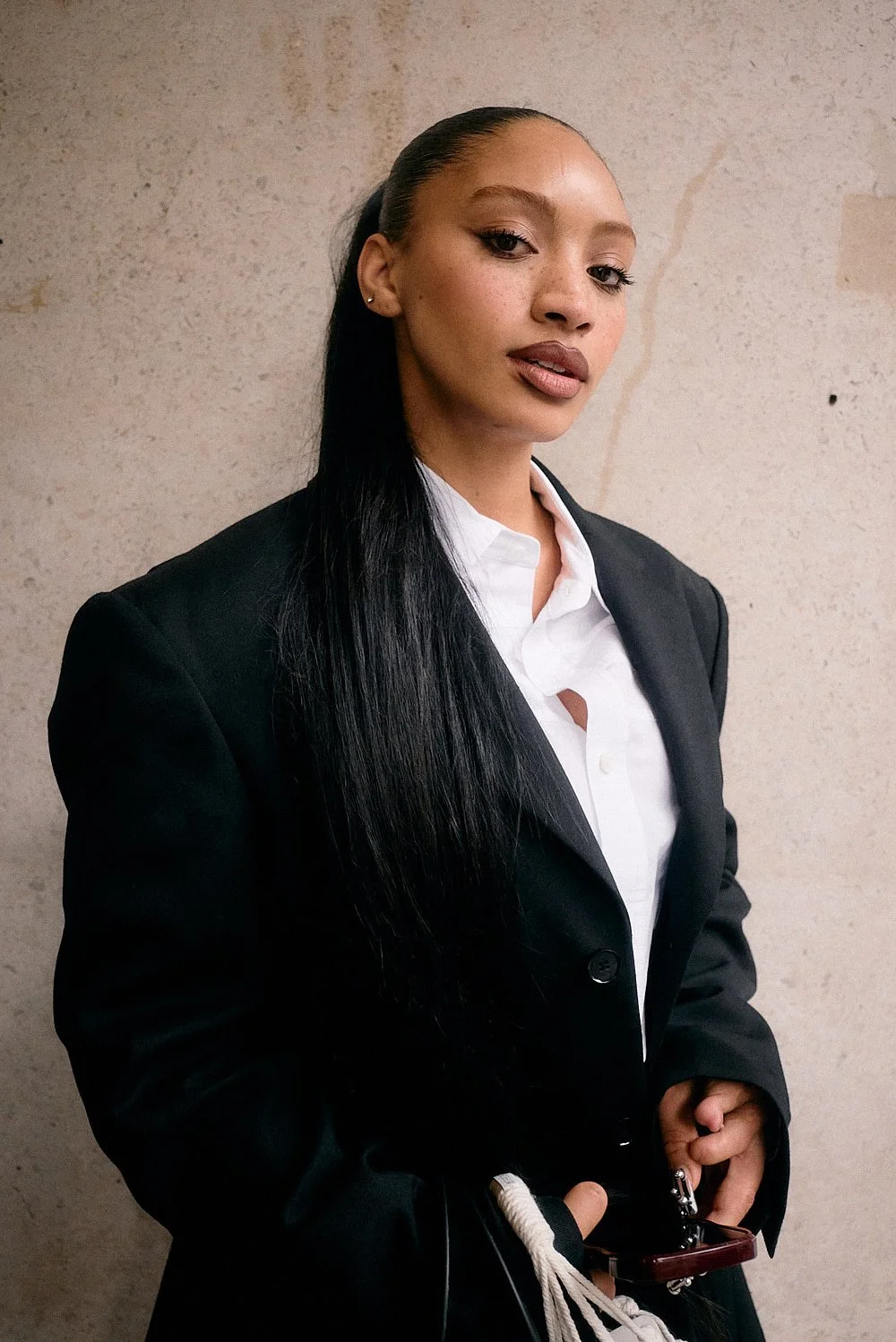
Street style portrait using overcast natural light at London Fashion Week AW25.

Street style portrait using direct natural sunlight at sunset at London Fashion Week SS26.
5. Know the story you’re telling
When you create a portrait on the street with the background you happen to have available, you are inherently creating a photo that’s been photographed an uncountable number of times.
To make it relevant and engaging is to tie in a story. Humankind has been creating centre-framed portraits for all of time; who they are, why you photographed, and what it connects to makes it relevant.
Admittedly, most of my candid street photography in London, for example, has been taken of strangers I’ve never spoken to and have no story about. Because of this, I seek fleeting moments instead to capture some kind of visual story.
For posed portraits, you exchange an organic moment for one you’re manufacturing. And that’s ok. But it’s often what you write or say alongside your portrait of a stranger that makes it interesting.
For example, all of the images in this blog post have come from Fashion Weeks; the event is the underlying reason why these photos were taken. What makes them interesting, at least to me, is the sense of style and individuality each subject has, and ultimately the snapshot of time each photo becomes.
Events like Fashion Week, parades, city gatherings, cultural festivals, holidays, or geographical areas like a neighbourhood are all reasons to tell a story about people, whether using a series of portraits or one strong one with a good story attached.
What story are you trying to tell? What body of work is this image contributing to?
If you’re making simple, traditional portraits – blurred background, centred framing, ambiguous location – the individual image matters less than the collection it lives in. Without context, it’s just a face. With intention, it becomes part of something larger.
Street fashion photography works best when each portrait feels connected, even if the subjects are strangers.
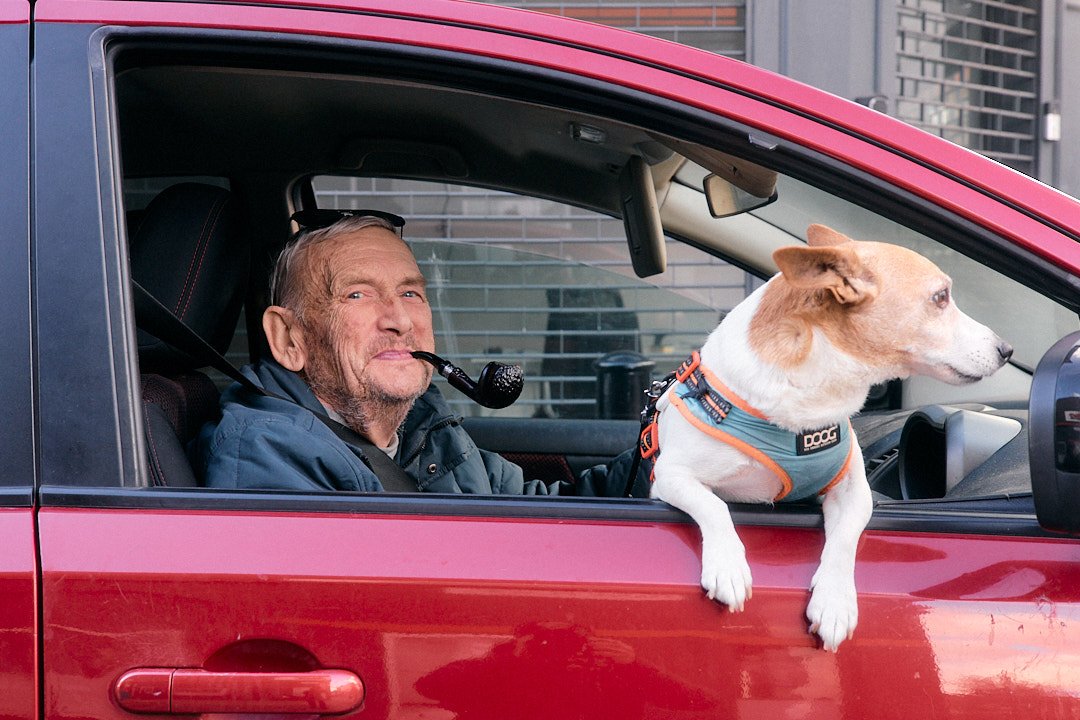
Street portrait in London, UK. Street portraiture exists for me outside of Fashion Week, with this one being one of the few I’ve taken in my neighbourhood in Bow, London, but I often gravitate to candid street photography.
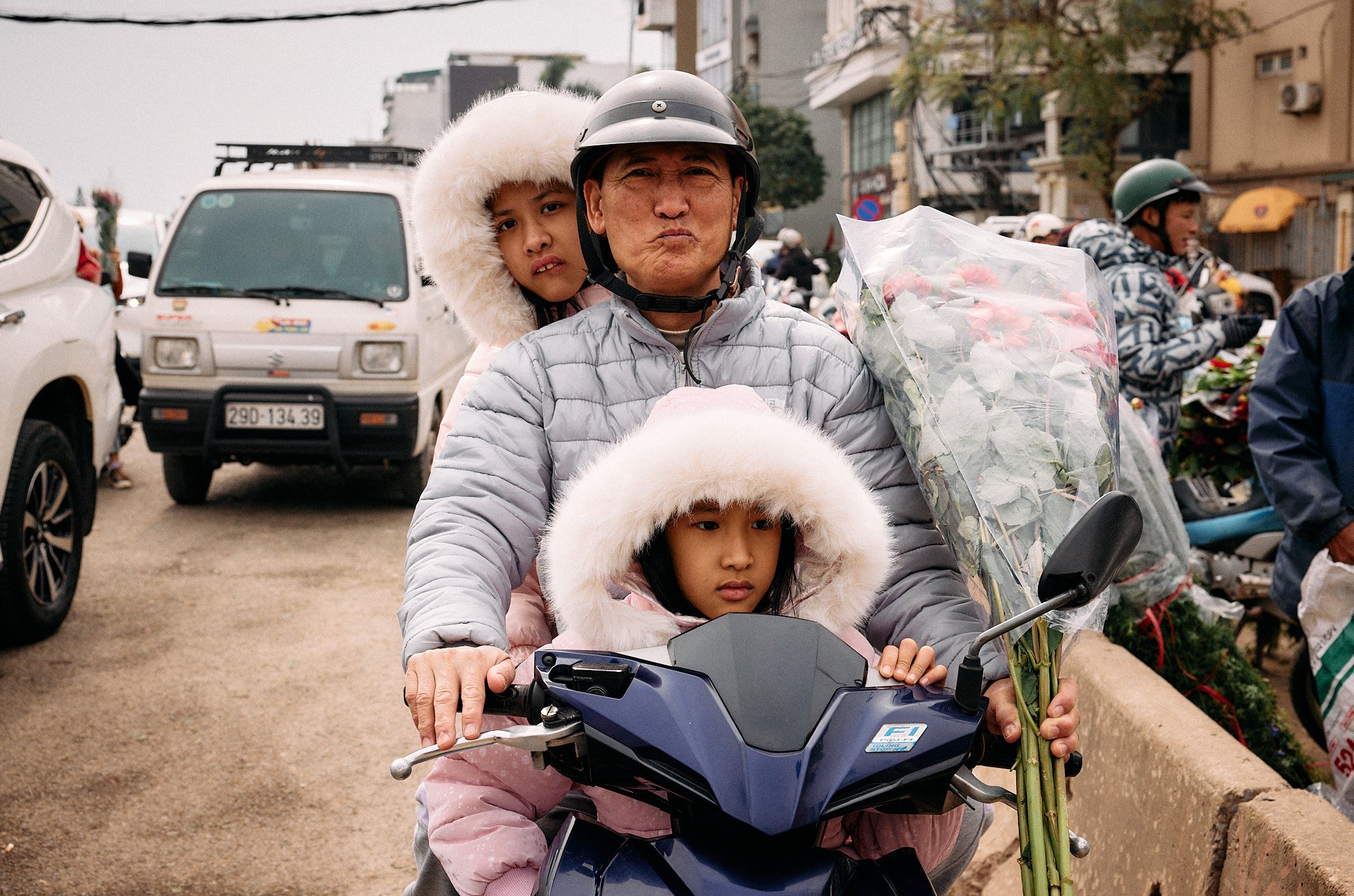
Street portrait in Hanoi, Vietnam. When I travel, I find I’m the most aware of my environment, and it pushes me to connect with those around me more. Body language is the single most important thing when you’re in a country you do not speak the language of. A smile and a nod is how I got this portrait.
In summary
Approaching strangers is a learned skill. I avoided it at all costs and stuck to the game of chance that’s candid street photography. Only when I was forced into it, when using a wide lens and needed to get an up-close usable shot, did I realise I enjoyed it.
I can count on only one hand the number of times I had someone decline me taking a portrait of them (or at least, the times I remember – it was otherwise quickly forgotten, furthering the point).
The more you do it, the more natural it feels, and the more your photography improves as a result. The creative focus is no longer on how you’re going to approach someone, but on the next composition you’re trying to create.
10 Key Takeaways to Remember
“Hey, I love your outfit, may I make a portrait of you?”
Simple, sincere language outperforms any clever script.Approaching strangers is a learned skill, not a personality trait.
Confidence comes from repetition, not natural boldness.Act like you belong.
Your presence and body language decide the outcome before your words do.Quantity breeds quality.
The more you approach, the easier it becomes—and the better your work gets.You’re not “taking a photo”; you’re making something together.
Mutual respect and consent create better portraits.Once someone says yes, you’re on borrowed time.
Move decisively, simplify your direction, and trust your instincts.Do what other photographers aren’t doing.
Change your angle, move closer, and use the environment intentionally.Bokeh is easy – context is memorable.
Deeper depth of field adds story, place, and editorial weight.Strong light creates strong photographs.
Don’t avoid sunlight or shadows – learn to use them to your advantage.Every portrait should serve a larger story.
Without context, it’s just a face; with intention, it becomes part of a body of work.
If you’d like to see more of what this approach creates, I share my most recent street photography and portraits on Instagram. It’s where I post new street style images from London, Paris, Milan, and beyond.
You can also join my infrequent newsletter below, where I share new collections, blog posts, and the occasional behind-the-scenes insight from life shooting the street and on set.